
Production for an optical lab
An AI workflow turns photos of handwritten prescriptions into validated orders, and every order is tracked station by station.
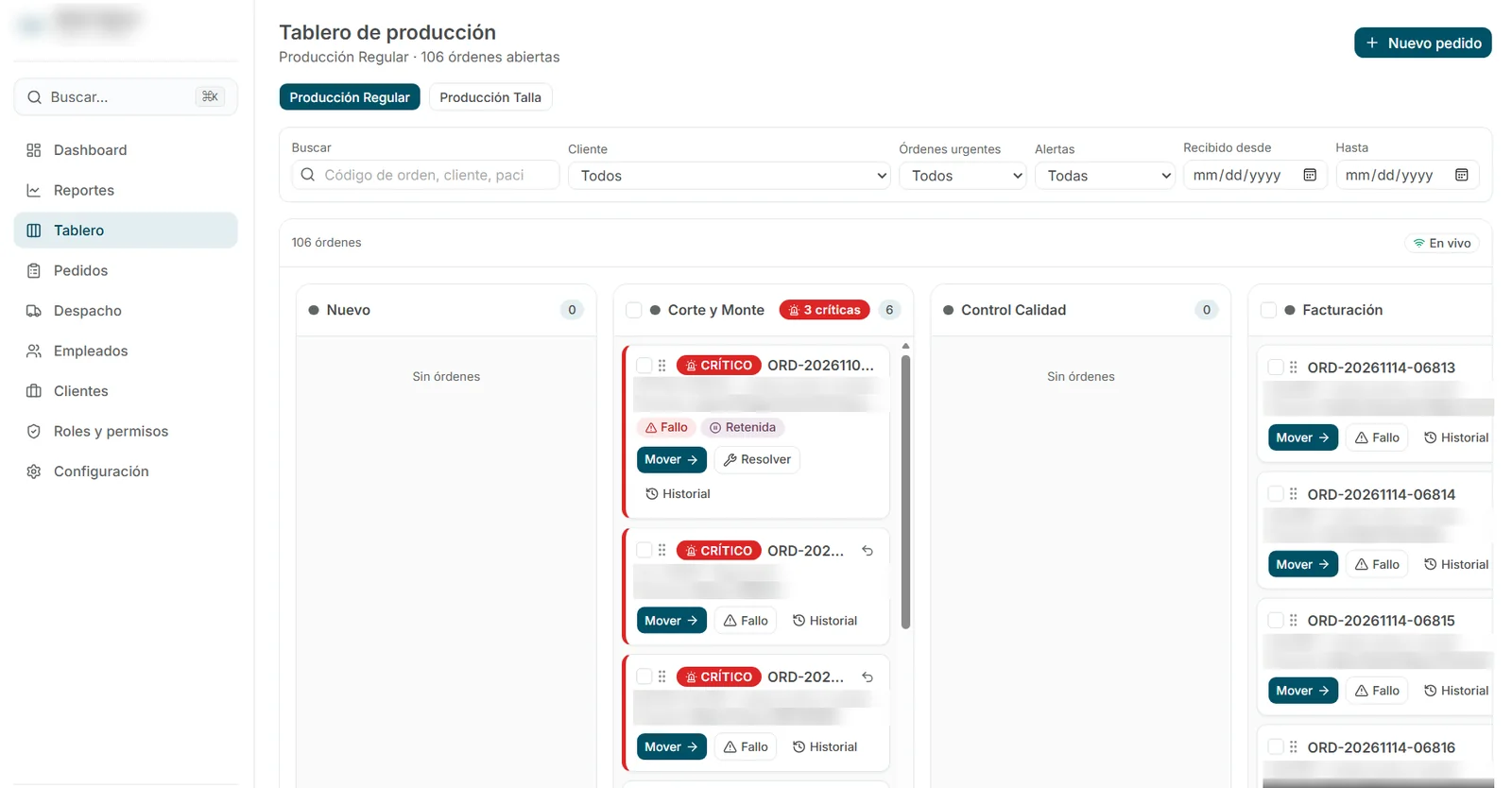
Results
- 6,000+orders processed
- 210+optical shops served
- 98.8%field accuracy reading prescriptions
- <1¢per prescription read
From photo to order
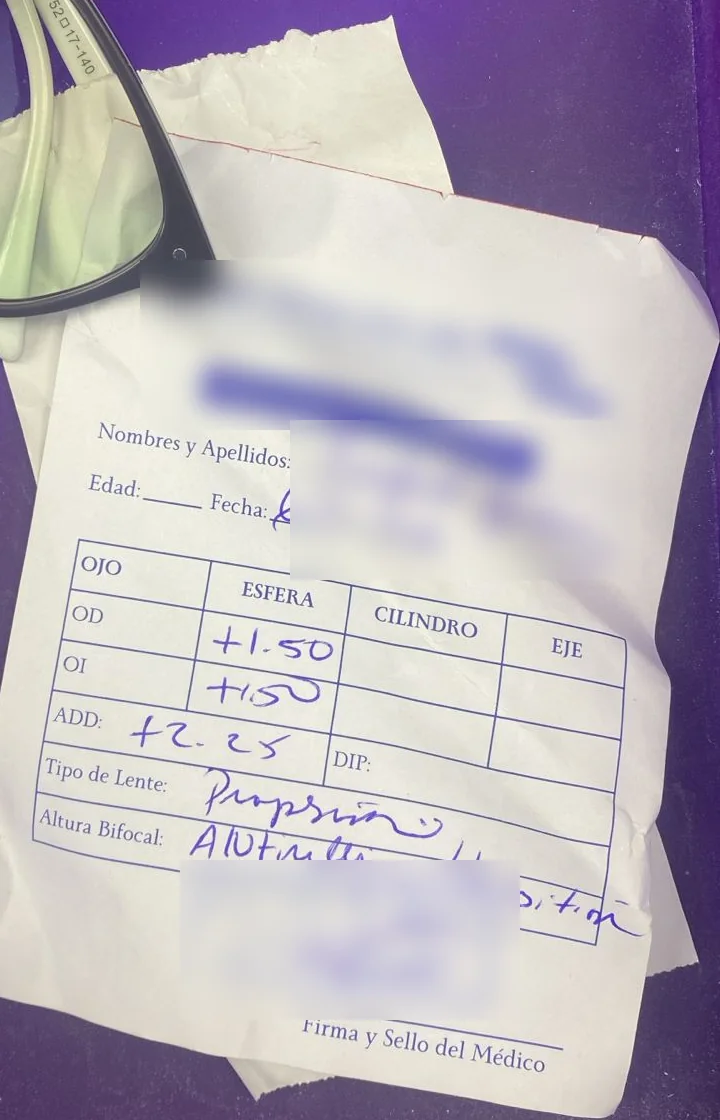
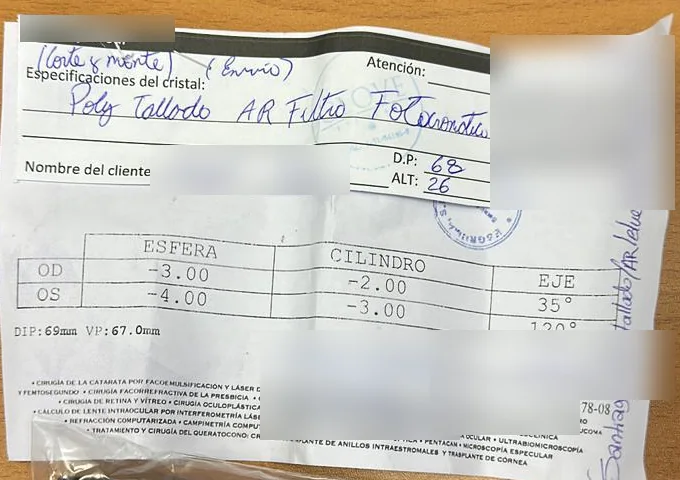
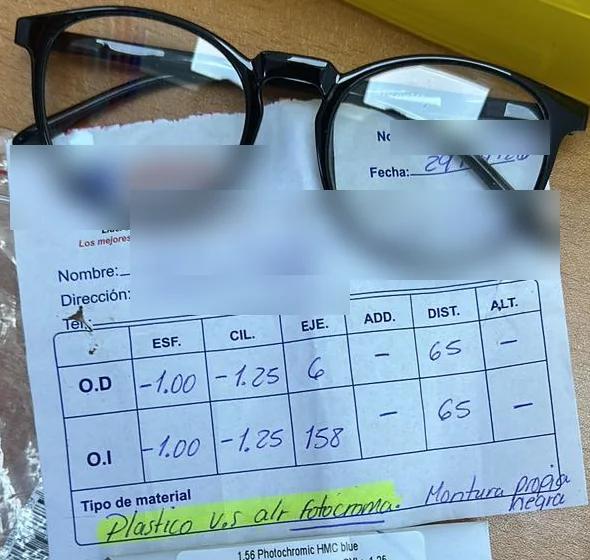
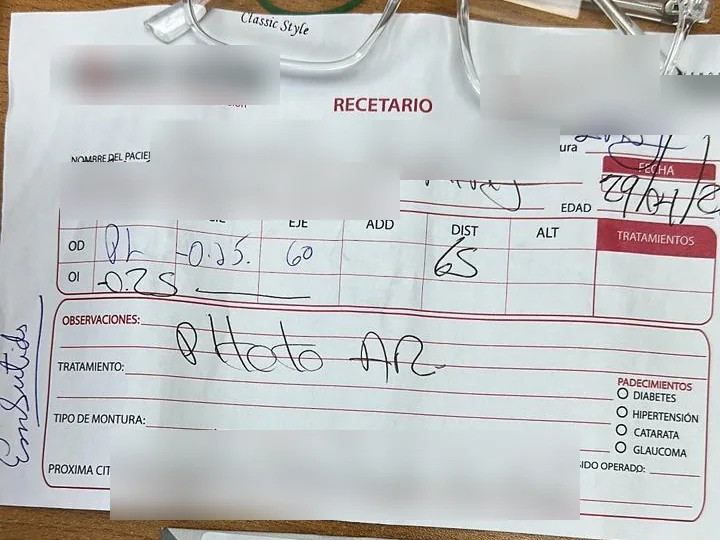
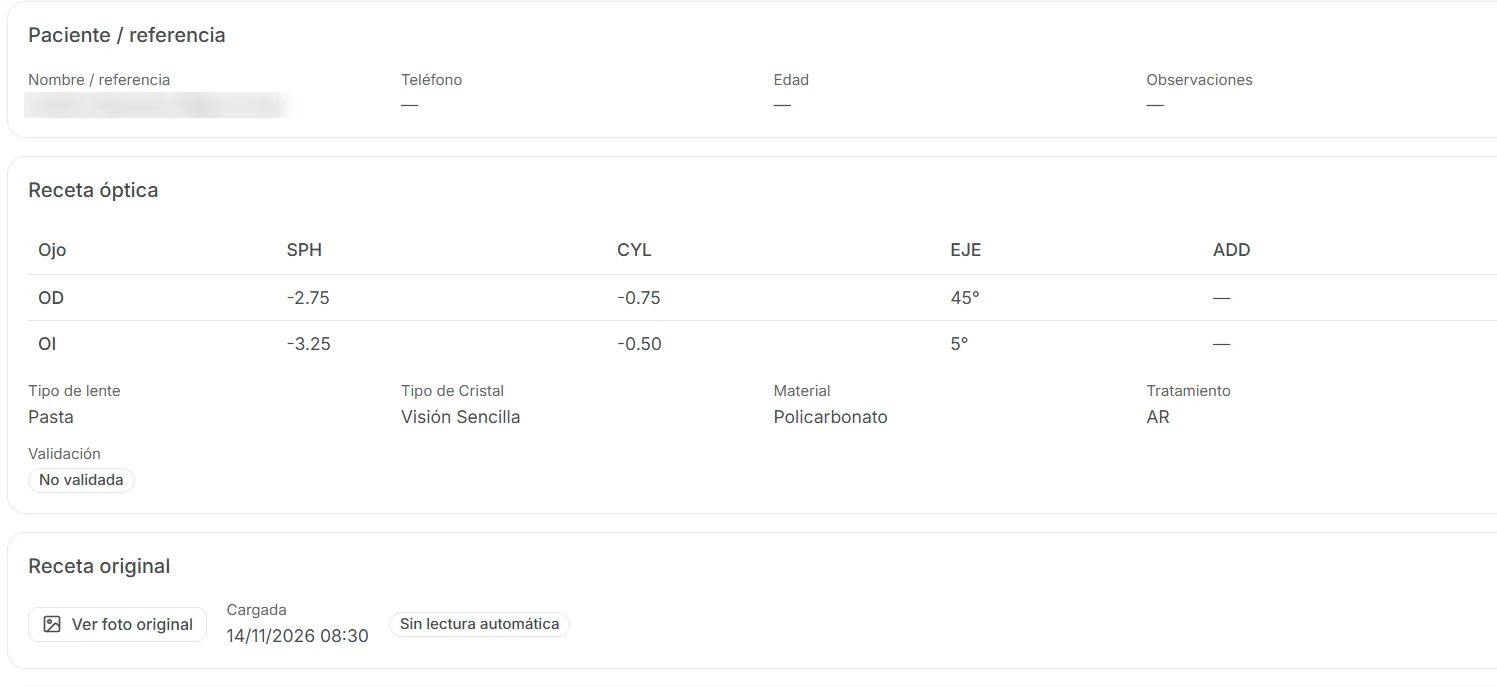
This is how prescriptions arrive: phone photos, handwritten, every shop with its own form. The AI workflow extracts the fields and the team reviews them before production.
The problem
The lab gets hundreds of orders a week from optical shops across the country. Almost all arrive on WhatsApp as a photo of a handwritten prescription.
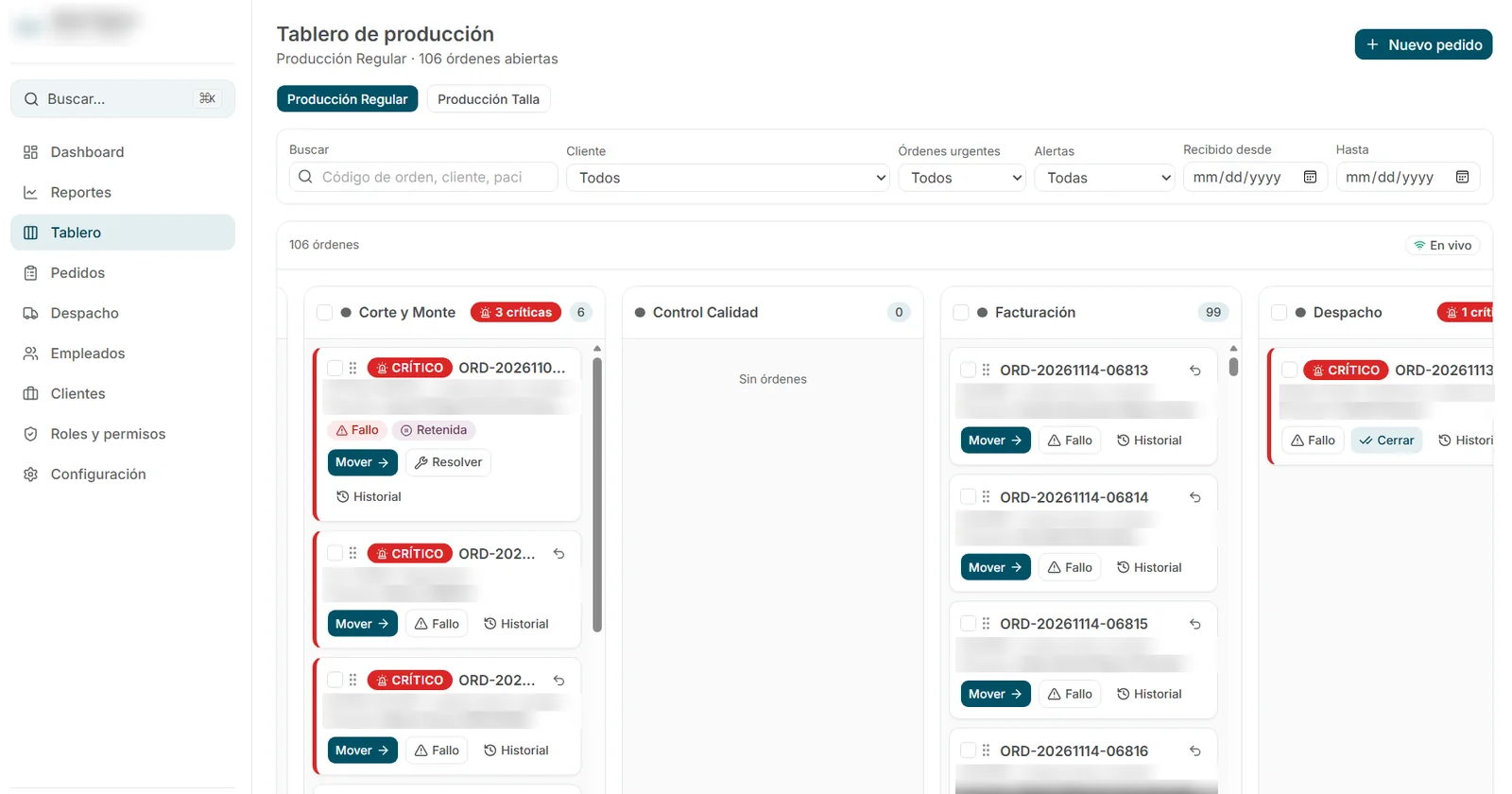
Every prescription had to be typed in, and every order was tracked by hand between stations. Knowing where an order was meant asking around.
What I built
A production board where each order moves through the lab's stations and every move is signed by whoever made it.
A service that reads the prescription photo and returns validated fields: sphere, cylinder, axis, add. The team reviews and confirms before production.
How
Strict schemas and human review
The model returns a fixed format that's validated against the lab's manufacturing rules. If something is off, the order doesn't move on its own.
Costs under control
Image preprocessing, provider prompt caching and retries. Each read costs under one US cent.
A reference set run on every change
Real prescriptions, labeled by hand. Every prompt or model change is measured against them before it ships: 98.8% field accuracy.
Got a similar process?
Tell me about it. The first call is free.